
How Should You Stretch? What Yoga Gets Wrong and Science Gets Right
Studies point to a simple formula — moderate intensity, short holds, repeated often — challenging how stretching is often taught in yoga classes.
By Yen Feng
Communications, Content, and Community Lead, Singapore Yoga Association
For a practice that relies so heavily on stretching, yoga has surprisingly little consensus on how it should be done.
Ask how long to hold a pose, how deep to go, or how often to practise, and the answers vary widely — shaped as much by lineage and teaching style as by evidence.
But across exercise science, the research on stretching is not nearly as divided.
In a recent breakdown of flexibility training, Jason Crandell reviewed the broader body of evidence — drawing on systematic reviews and meta-analyses — to outline what is, by now, a fairly consistent picture of how flexibility actually improves.
“The evidence on stretching protocols is really consistent,” he said in a podcast published in April. “It’s much more consistent than the noise in modern yoga or social media would have you believe.”
Prime, then pull
The findings challenge some of the assumptions that shape how stretching is often taught in yoga classes.
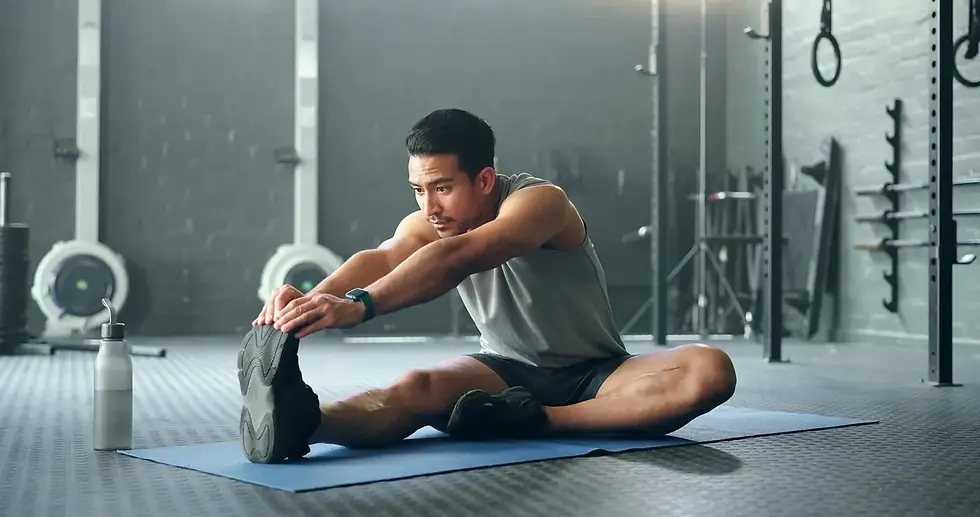
One of the most basic distinctions is between dynamic and passive stretching — two approaches that are frequently blended in practice but work through different mechanisms.
Dynamic stretching — moving through a controlled range of motion, as in Sun Salutations — primarily prepares the body for activity. It increases tissue temperature, improves elasticity, and primes the nervous system.
Passive stretching, by contrast — holding a pose at end range — is where longer-term changes in flexibility are more likely to occur, through gradual adaptation of muscle and connective tissue.
Most yoga classes incorporate both, often without naming the difference. But the sequencing matters: movement first, then longer holds.
Where the research becomes more specific — and where it diverges most clearly from common teaching cues — is in the details of intensity and duration.
Studies consistently show that moderate intensity stretching — a level of effort that produces noticeable discomfort but not strain — leads to the greatest improvements over time.
Stretching too lightly does not provide enough stimulus. Stretching at maximal intensity can trigger the body’s protective reflex, causing muscles to contract rather than lengthen.
“The sweet spot is moderate,” Crandell said. “Enough to get your attention, but not enough to overwhelm the system.”
Duration, too, appears more straightforward than many practitioners expect.
Across studies, 30 to 60 seconds per stretch emerges as the most effective range. Holding poses longer does not appear to produce additional gains in flexibility, even though longer holds may serve other purposes, such as improving focus or tolerance to discomfort.
Perhaps the most significant — and least discussed — variable is frequency.
In research settings, participants who stretch multiple times per week consistently show greater improvements than those who stretch less often, even when individual sessions are shorter.
Five sessions per week, with moderate intensity and 30-to-60-second holds, produced the most reliable results. Practicing two to three times weekly still led to meaningful gains.
By contrast, infrequent but prolonged sessions were less effective.
“The total amount of stretching you do over time matters more than what happens in a single session,” Crandell said.
The Goldilocks problem
These findings point to a shift in emphasis that may feel subtle but has broad implications for how yoga is practised and taught.
In many classes, attention is placed on how a pose feels in the moment — how deep it goes, how long it is held, how much sensation it produces.
The research suggests that what matters more is what happens over time: repeated exposure, moderate effort, and consistency.
That does not mean longer holds or gentler stretches have no place. Crandell noted that practices such as Yin or restorative yoga can offer benefits that extend beyond flexibility, including nervous system regulation and mental focus.
But those benefits are distinct from the mechanisms that drive physical change.
“You can do something because you love it,” he said. “But it’s important not to conflate preference with data.”
For yoga practitioners, the takeaway may be less about changing what happens on the mat, and more about understanding it differently.
Stretching, the research suggests, is not about pushing further or holding longer in a single session. It is about showing up, regularly, and working within a range the body can adapt to.
For a practice often defined by its pursuit of the “peak” pose, these findings offer a clearer, more sustainable path forward.
Flexibility, it turns out, is not won in a single, heroic effort of endurance. It is earned in the mundane, moderate, and remarkably brief minutes of showing up, day after day.
Originally published by The Yoga Edit on 04 May 2026. Republished with permission.
About the Author
Yen Feng is the Communications, Content, and Community Lead of the Singapore Yoga Association (SYA) and the Founder & Editor of The Yoga Edit, a modern online publication exploring yoga as a living culture through thoughtful writing on the people, practices, and ideas shaping the yoga community today.
Read more of Yen's work at The Yoga Edit

Comments